
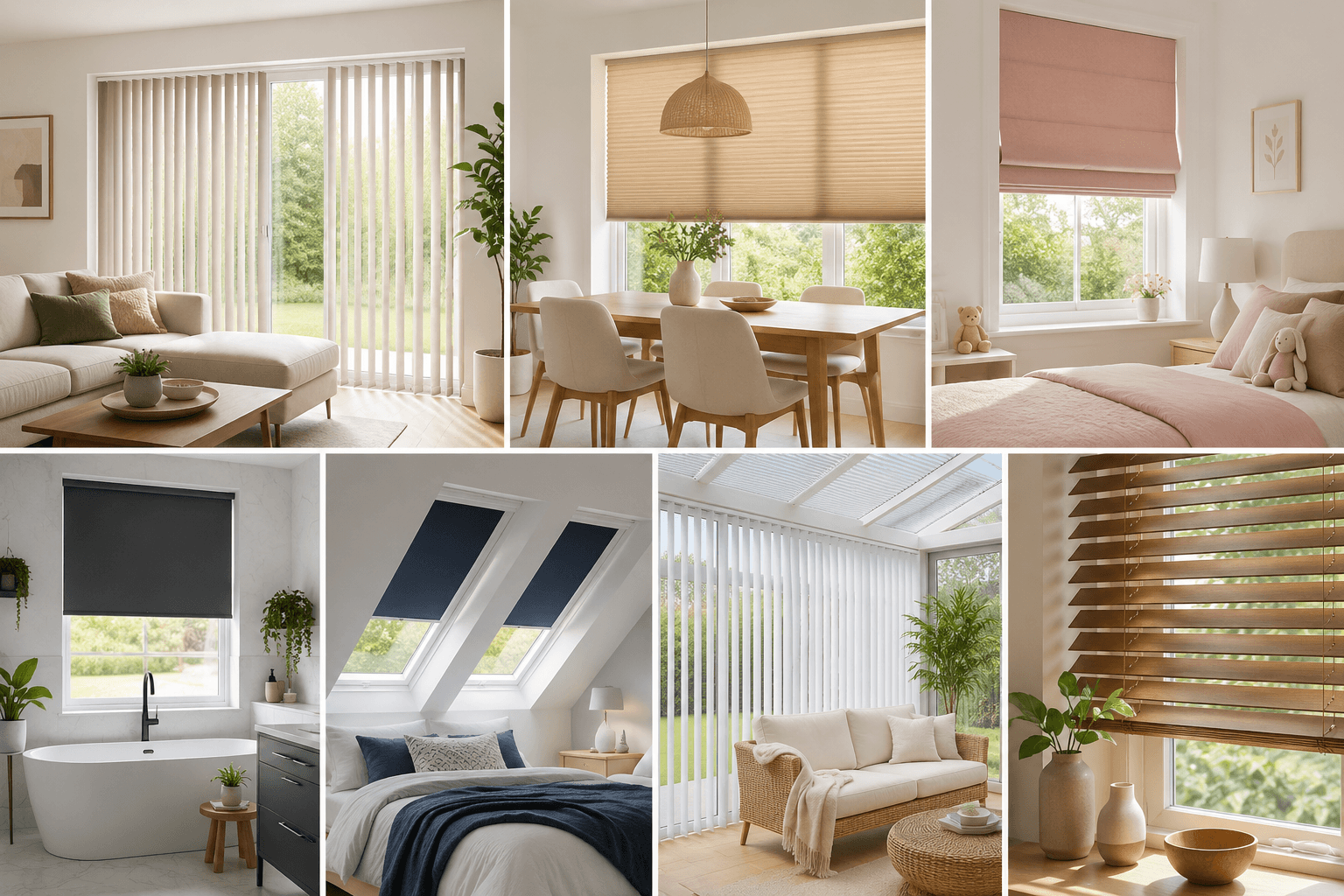
Using the same blinds throughout a home can create a neat, coordinated look, but it is not always the most practical choice.
Different rooms have different needs. A bedroom may require strong light control, a kitchen needs easy-clean materials, while a living room may benefit from window blinds in Hull that balance privacy with natural daylight.
The better approach is usually to create visual consistency without forcing every room to use exactly the same blind.
Start with how each room is used
Bedrooms need privacy and light control. Kitchens deal with moisture and cooking residue. Living rooms often need flexible daylight, while home offices may require better control of screen glare.
Choosing one blind type for all of these spaces can mean compromising somewhere.
If you are unsure which products suit different parts of the home, our guide to the different types of blinds in Hull is a useful place to compare the main options.
Bedrooms may need stronger light control
Blackout screen blinds in Hull homeowners choose can help reduce unwanted outside light and create a darker sleeping environment. They can be especially useful in children’s rooms, guest bedrooms or rooms affected by street lighting.
A blackout blind does not necessarily need to match the lighter blind used downstairs. Keeping the colour palette consistent can still make the overall home feel coordinated.
Roller blinds work well in practical spaces
A moisture-resistant roller blind may suit a kitchen or bathroom, while a light-filtering version can work well in a living room or office.
This is a good example of how you can maintain a similar style throughout the home while changing the specification to suit each space.
Living and dining rooms can take a softer approach
Roman blinds in Hull can introduce fabric, texture and softness without making the room feel overly formal. They can work particularly well in living rooms, bedrooms and dining spaces.
However, using the same Roman blind in a moisture-heavy kitchen may not always be practical. The material should suit the conditions as well as the décor.
Our article on which blinds work best in kitchens in Hull explains why some materials perform better than others in busy cooking spaces.
Venetian blinds offer flexibility where privacy changes during the day
Venetian blinds in Hull allow you to alter the angle of the slats so you can reduce outside views without completely blocking daylight.
That can make them more suitable for front rooms, dining areas and home offices than a fully opaque blind.
You therefore do not need to use Venetian blinds everywhere simply because they work well in one room.
Roof windows need their own solution
For this reason, skylight blinds in Hull homeowners use are normally designed specifically to stay positioned against angled glazing. A standard blind intended for a wall window is unlikely to provide the same fit or operation.
For compatible branded roof windows, Velux Blinds in Hull can also provide purpose-designed light control.
If your home has roof glazing, you can explore the practical considerations in Are skylight blinds worth it in Hull, UK?.
Roof lanterns are another exception
Electric lantern roof blinds in Hull properties use can make sense because the glazing may be difficult or impossible to reach manually. Motorised operation allows the blind to be adjusted without ladders or awkward controls.
The British Blind and Shutter Association also notes that motorisation can be particularly useful for hard-to-reach glazing.
Trying to match a roof-lantern blind exactly with every conventional blind elsewhere in the home is therefore usually unnecessary.
How can you make different blinds still look coordinated?
You can create continuity by repeating one or two design elements, such as:
- Similar neutral colours
- Matching wood tones
- Consistent metal finishes
- Complementary fabric shades
- Similar levels of visual simplicity
For example, one room could use a cream roller blind while another uses a cream Roman blind. They perform differently but still feel connected.
This approach gives each room the blind it needs without making the house feel visually disjointed.
Consider what can be seen from outside
If several windows sit next to each other on the same elevation, dramatically different colours or backing materials can look uneven from outside.
You can still use different blind types, but choosing similar outward-facing colours can create a more uniform appearance.
Safety may also affect your choice
UK guidance states that new blinds with looped cords must have appropriate child-safety devices fitted or supplied with them. The BBSA also recommends cordless, concealed-cord or other “safe by design” options where possible.
This may mean choosing a different operating system in a child’s bedroom even if the rest of the house uses another type.
Create consistency without sacrificing practicality
A better approach is to choose each blind according to the room’s light, privacy, moisture and operating requirements, then use colour or finish to create a consistent look across the home.
If you are planning several rooms and want help choosing styles that work together without compromising practicality, get in touch with Ideal Blinds for advice tailored to your windows and your home.