

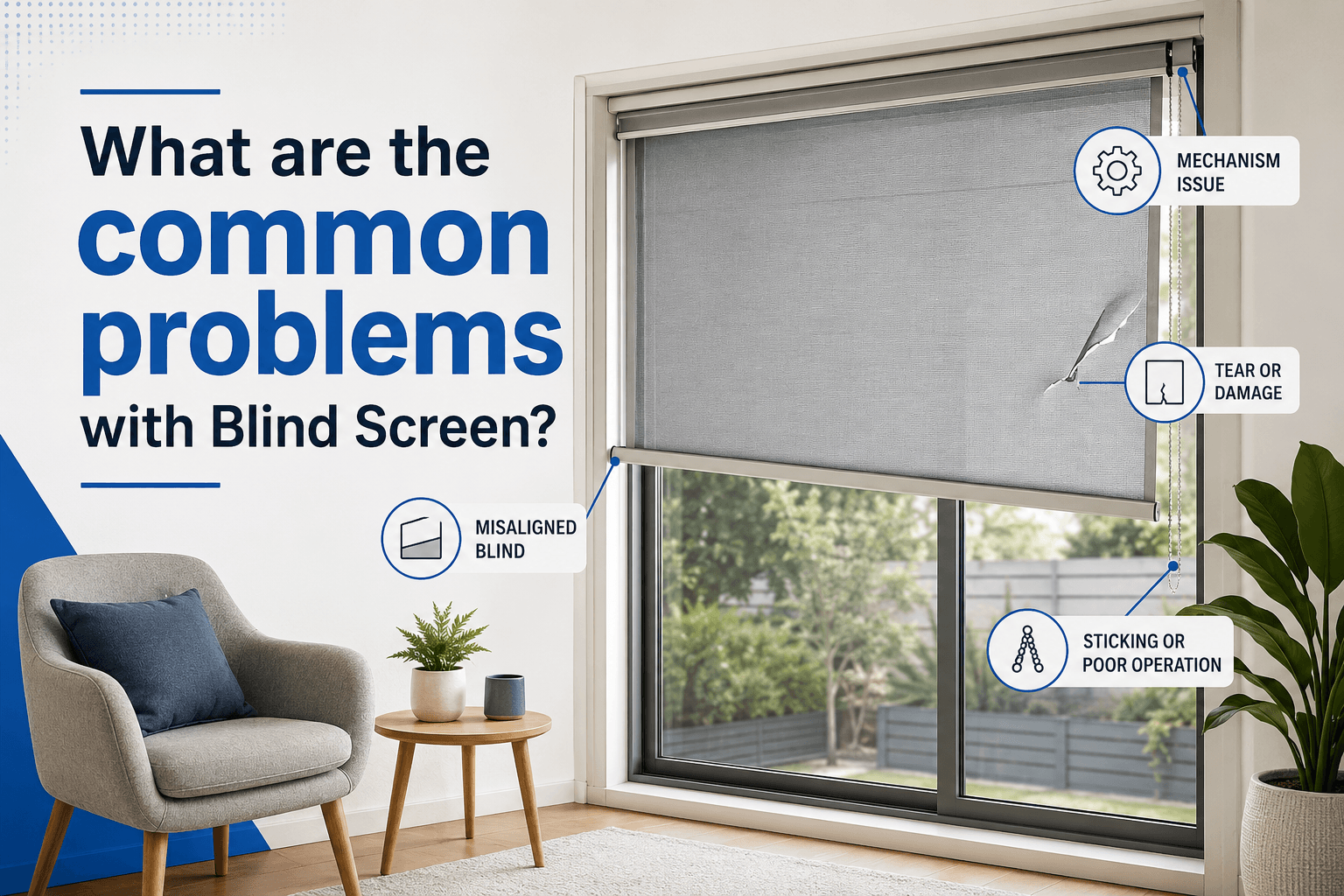
A blind screen can look like a simple window solution.
But when it is the wrong fit, poorly installed, or not suited to the room, small issues start to show up quickly. For homeowners searching for blind screen in Hull, the most common problems usually come down to fitting, operation, light control, and how well the blind suits the space.
Knowing what can go wrong makes it much easier to choose the right option from the start.
Poor fit around the window
If a blind screen is too narrow, too short, or not measured correctly, it can leave visible gaps around the edges. That affects both privacy and light control, especially in bedrooms or front-facing rooms.
It can also make the blind look unfinished, even if the material itself looks good. That is why accurate measuring matters more than many people realise. If you are planning new blinds, it helps to read how to measure windows correctly for blinds (without guesswork) before choosing a style.
Light leaking in at the sides
In reality, light gaps are common when the blind is recessed, not made to measure, or simply not the right product for the room. This is especially noticeable early in the morning, in street-lit areas, or in bedrooms where stronger blackout performance is needed.
The issue is not always the blind quality itself. Sometimes it is just the wrong blind for the job.
Stiff or awkward operation
If it feels stiff, catches on one side, rolls unevenly, or does not sit properly when raised and lowered, that is often a sign of poor fitting, wear in the mechanism, or strain caused by repeated use.
This can be frustrating in everyday spaces such as kitchens, patio doors, and living rooms where the blind is used regularly. A blind that looks fine but feels awkward soon becomes a nuisance.
Fabric creasing or edge curling
Some blind screens can start to curl at the edges, crease through the middle, or lose their straight appearance over time. This can happen because of moisture, sun exposure, poor storage before fitting, or lower-quality materials.
In a room where appearance matters, this can make the whole window feel less finished.
Dirt, grease, and everyday marks
In kitchens, utility rooms, and busy family spaces, blind screens can collect grease, dust, and fingerprints surprisingly quickly. Lighter colours often show marks faster, while textured or delicate materials can be harder to wipe down.
That is why room choice matters. A style that works well in a bedroom may not be the best option in a steamy kitchen or a high-traffic dining area. If that is relevant to your home, which blinds work best in kitchens in Hull, UK? let’s break it down room by room is a useful related read.
Problems caused by choosing the wrong type
It is with the fact that the product was never the best match for the room, window shape, or how the space is used. A blind that looks great in a showroom may feel impractical once it is fitted in real life.
That is why it helps to compare different options before deciding. In many homes, the best result comes from understanding what are the different types of blinds in Hull, UK? rather than picking the first style that looks attractive.
Wear around the chain, cord, or controls
Chains can become stiff, controls can feel loose, and repeated pulling can put stress on the blind if it is used heavily every day. This is especially true in family homes where blinds are opened and closed often.
The UK government also states that new blinds with looped cords must have child safety devices fitted at manufacture or be sold with them, which is an important point for households with young children.
Moisture-related issues
That matters because some blind materials cope much better than others. In bathrooms, kitchens, and conservatories, the wrong blind screen can warp, mark, or lose its shape more quickly than expected.
This is one reason made-to-measure advice can be helpful. The material matters just as much as the style.
Installation issues in older or listed properties
Hull guidance notes that alterations to listed buildings, including internal works affecting character, may require listed building consent.
That will not apply to every property, but it is worth checking if your home is listed or has more sensitive original features around the windows.
How can you avoid these problems?
Choose the right blind for the room.
Measure properly.
Make sure the fitting and operation suit how the window is used every day.
A lot of problems only become obvious after installation, which is why careful selection matters more than rushing to the cheapest option.
Bringing it all together
None of these issues are unusual, but many of them are preventable with the right advice and the right measurements. If you want help choosing a blind that works properly and looks right in your home, get in touch with Ideal Blinds for straightforward guidance tailored to your space.